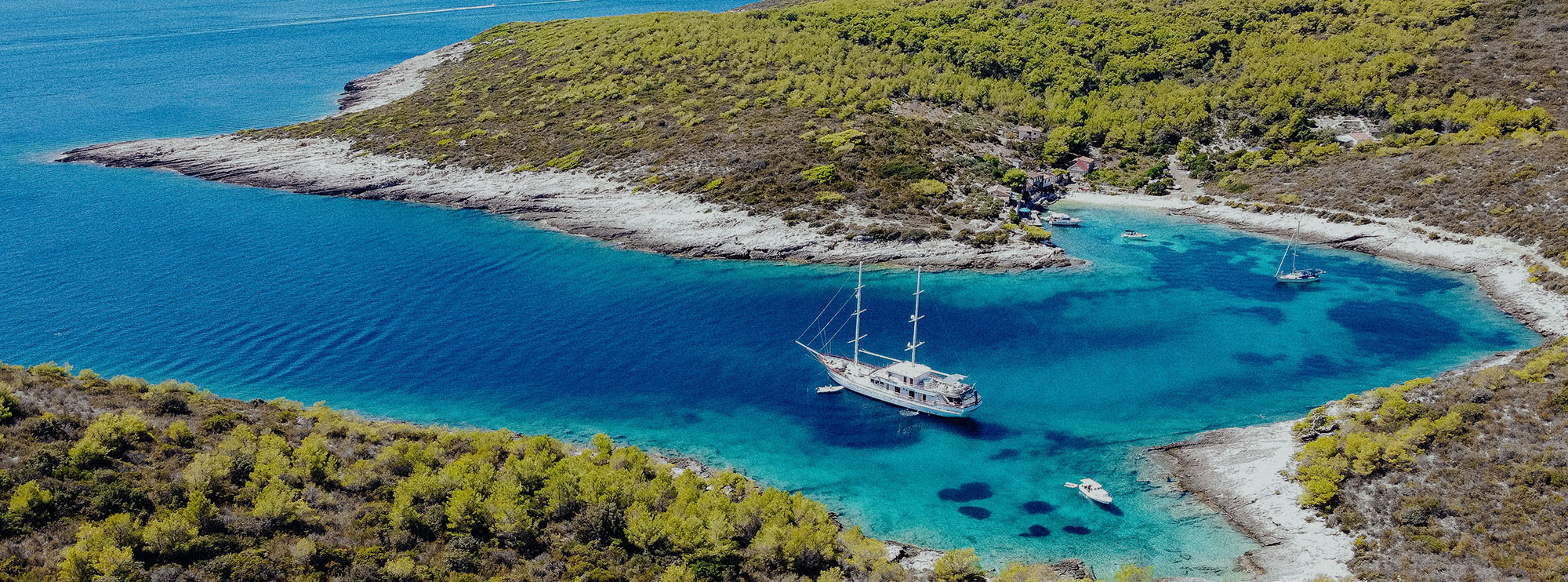


Where Is Turkey on the Map?
Geography often explains more than long descriptions.
Turkey’s location is one of those examples.
Sitting between continents and seas, the country connects regions, cultures, and travel routes.
Location note. Turkey’s position directly influences climate zones, travel styles, and regional itineraries.
This geographic diversity is also one reason why coastal travel and sailing holidays are so varied.
Turkey Between Europe and Asia
Turkey sits at the crossroads of Europe and Asia and naturally acts as a bridge between the two continents. Because of this position, the country connects the Balkans with the Middle East. In addition, Turkey is surrounded by seas on three sides, which gives it long and varied coastlines.
The Mediterranean Sea lies to the south, the Aegean Sea to the west, and the Black Sea to the north.
Capital City and Major Population Centres
To the west, Turkey borders Greece and Bulgaria, placing it close to mainland Europe. Meanwhile, its eastern borders include Georgia, Armenia, Azerbaijan (Nakhchivan), and Iran. Further south, the country shares borders with Iraq and Syria.
By contrast, the Black Sea defines much of Turkey’s northern edge. Ankara serves as the capital city and is located inland. Istanbul, however, is the most populous city and uniquely spans both Europe and Asia across the Bosphorus Strait.
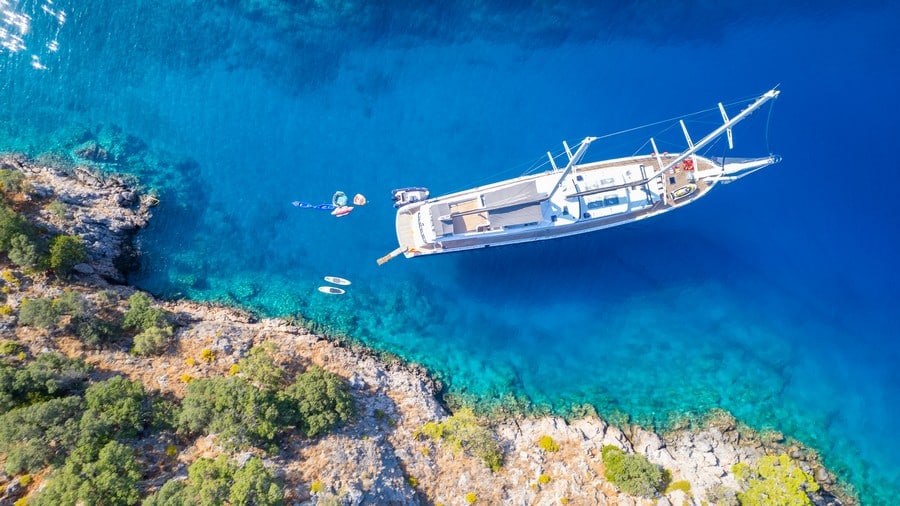
Basic Information About Turkey
Capital: Ankara
Largest City: Istanbul
Population: Over 80 million
Tourism Season: All year round
Seas: Aegean Sea, Mediterranean Sea, Black Sea, Marmara Sea
In terms of population density, Istanbul, Ankara, and Izmir rank as the country’s three largest cities. Moreover, Turkey experiences four distinct seasons, shaping both daily life and travel patterns. As a result, visitors encounter a mix of modern urban living and long-standing cultural traditions.
Key Business and Tourism Sectors in Turkey
Tourism plays a central role in Turkey’s economy.
For this reason, the country has developed multiple tourism concepts, including cultural tourism, health tourism, blue cruise holidays, eco-tourism, package tours, and hotel-based travel. Many of these travel styles are closely linked to coastal regions featured in our gulet charter planning guides. Overall, Turkey remains an active destination for international visitors in every season.
One External Reference
For a neutral geographic overview of Turkey’s continental position, you can also review this reference: Britannica – Turkey overview